

Erik Seidel: 10 Bracelets, $5M, and the Unstoppable Legacy of a Poker Titan
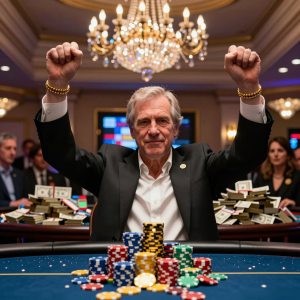
The 56-Year-Old Maestro Who Still Knows How to Play
When Erik Seidel claimed to "not even think I know how to play" at the 2015 WSOP, he was joking—because the 56-year-old New Yorker just won Event #11: $10,000 Super Millions High Roller on GGPoker for $977,842. This victory cemented his place as one of the five players to hit the 10-bracelet mark, a feat that would have earned him a world championship in 1988 had he not botched a critical all-in against Phil Ivey at the 1988 Main Event.
Seidel's 2015 was a masterclass in consistency. With eight WSOP bracelets already under his belt, he showed no signs of slowing down.
His $5 million-plus earnings that year proved that age is just a number for the poker legend. As he quipped, "I don't even think I know how to play," the irony was not lost on the poker community—because he still dominated the tables like a seasoned tactician.From Internet Qualifier to WSOP Titan: The Moneymaker Effect
While Seidel was busy chasing bracelets, Chris Moneymaker's 2003 WSOP Main Event victory created a seismic shift in the poker world. Qualifying online for the $10,000 Main Event, Moneymaker's $2.5 million prize became the catalyst for what's known as "The Moneymaker Effect"—a phenomenon that turned poker into a global sensation.
Moneymaker's story is a classic underdog tale. With a stack of just 62,000 chips in the final stages, he faced a brutal final table that included legends like Johnny Chan and Phil Ivey. His defeat to Punnat Punsri with pocket jacks (a hand that lost to king-queen) marked the end of his 2003 run, but it was the beginning of a new era. As Barry Greenstein admitted, "Moneymaker won $2.5 million, I won twice that"—but the real winner was poker itself.
Doyle Brunson: The Man Who Broke the Main Event Curse
Doyle Brunson's 1976 WSOP Main Event victory was a watershed moment in poker history. As the first player to win the tournament, Brunson's triumph not only solidified his legacy as a Hall of Famer but also set the stage for future legends. His 1976 win was the start of a journey that would see him enter the Main Event 10 times, a record that stands to this day.
Brunson's 1976 victory was more than just a trophy—it was a cultural milestone. His iconic "I'm a winner" celebration became a symbol of poker's rise from a niche game to a mainstream phenomenon. Even decades later, Brunson's 10 Main Event entries (and one victory) remain a benchmark for aspiring champions. As he once said, "The Main Event is the ultimate test of a player's mettle."
Barry Greenstein: The 2003 Champion Who Made More Than Moneymaker
While Chris Moneymaker's $2.5 million prize made headlines, Barry Greenstein's 2003 WSOP cash game earnings were even more staggering. Greenstein, a seasoned pro with a reputation for sharp play, finished second in the Main Event but still walked away with over $5 million in total earnings—more than double Moneymaker's prize.
Greenstein's 2003 run was a masterclass in tournament strategy. His ability to navigate the final table with composure and precision highlighted why he's considered one of the greatest cash game players of all time. As he reflected, "Moneymaker won $2.5 million, I won twice that"—a testament to his longevity in the game. Greenstein's career, spanning over three decades, is a reminder that poker's elite are often the most consistent performers.
Jamie Gold: The 2006 Champion Who Sold His Bracelet for $65,725
Jamie Gold's 2006 WSOP Main Event victory was a flash in the pan that captured the world's attention. With a final table that included eventual champion Phil Ivey, Gold's $2.5 million prize was a record at the time. But the real story was how his bracelet later sold for $65,725 on Heritage Auctions—a price that speaks to the enduring value of poker memorabilia.
Gold's journey from a relative newcomer to a Main Event champion was a microcosm of the poker boom. His victory in 2006 was the first time the tournament had a 100-player field, a testament to the game's growing popularity. Even as his bracelet changed hands, Gold's legacy as a pioneer of the poker explosion remains intact. His story is a reminder that even the most fleeting moments in poker history can have lasting impact.
Howard Lederer: The "Squeaky" Who Stole the Show
Howard Lederer's 1997 WSOP Main Event victory was a masterclass in aggressive play. Known for his "squeaky" style, Lederer's 100-to-1 upset over the heavily favored Phil Hellmuth was a defining moment in poker history. His victory not only earned him $1.5 million but also cemented his reputation as one of the most dangerous players in the game.
Lederer's 1997 run was a perfect example of how a well-timed all-in can change the course of a tournament. His ability to read the table and capitalize on his opponents' mistakes was a hallmark of his career. As the "Squeaky" himself once said, "In poker, you don't have to be the best player to win—you just have to be the one who makes the right move at the right time."
The WSOP Player of the Year: A Legacy of Excellence
The 2015 WSOP Player of the Year winners—Erik Seidel, Doyle Brunson, and others—represent the pinnacle of poker achievement. Seidel's 10 bracelets, Brunson's 10 Main Event entries, and the collective impact of Moneymaker and Greenstein all point to a single truth: the WSOP Player of the Year is more than just a title—it's a testament to a player's ability to consistently perform at the highest level.
These legends have shaped the modern poker landscape. Their stories are not just about winning tournaments but about how they've influenced the game's evolution. From the internet qualifier to the seasoned veteran, each WSOP Player of the Year has left an indelible mark on the sport. As the poker world continues to grow, their legacies will endure as the gold standard for excellence.
- 参考自:GG扑克官网
- 参考自:coinpuker官网
- 参考自:natura18官网
常见问题
收集玩家最常询问的问题,提供详细解答。若有其他疑问,欢迎联系客服团队。